AI Receptionist for Contractors: What It Costs, What It Does, and Does It Work?
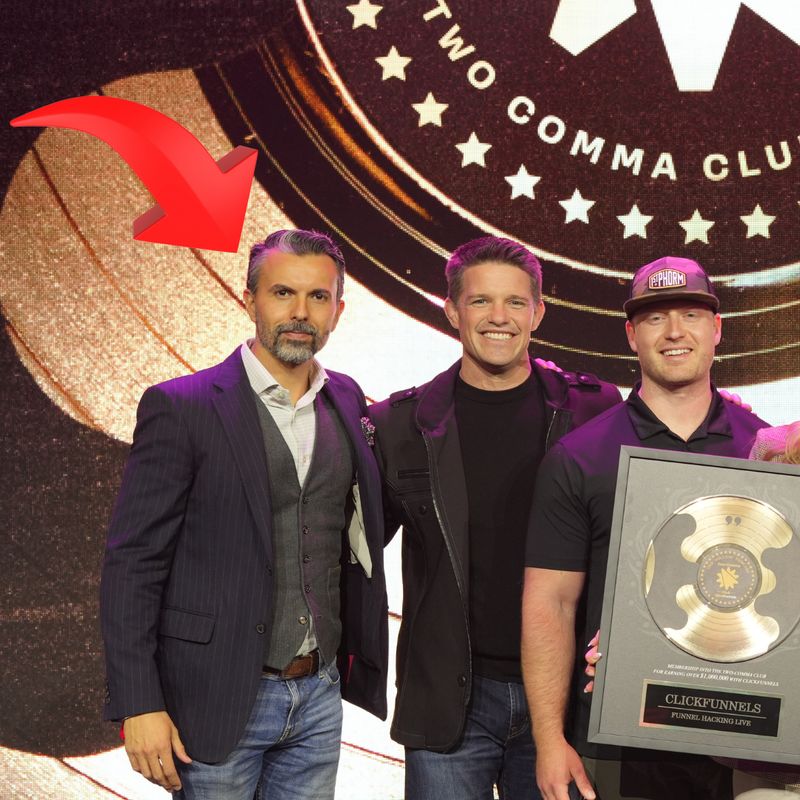 By Alfredo Haro-Goñi · November 10, 2026 · 12 min read

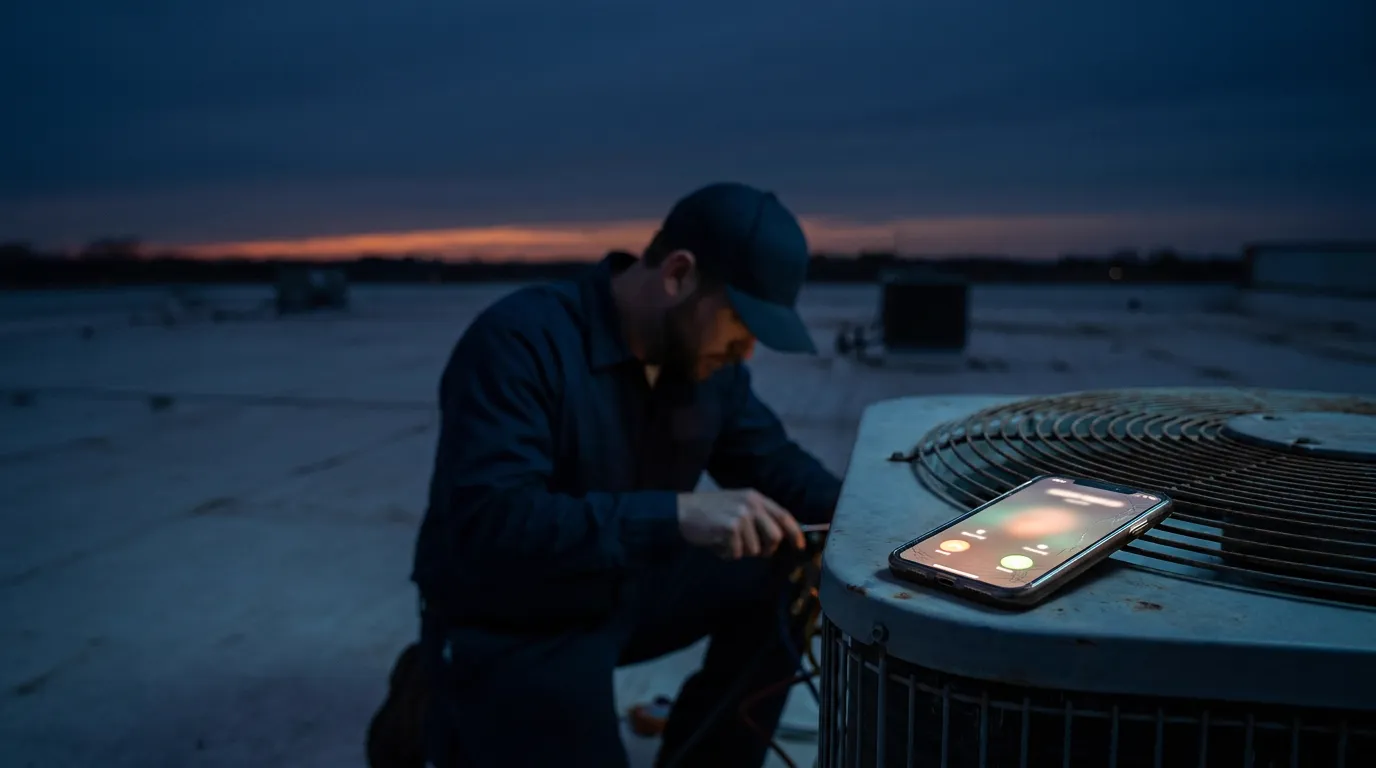
An AI receptionist is software that answers your business phone, talks to the caller in a natural voice, and books the job on your calendar. For a contractor, it picks up the calls you can't: on a roof, under a sink, at dinner, at 9:40 on a Saturday night. The best setups go one step further: the same AI also answers the chat box on your website, so the people who'd rather type than call get booked too. Whether any of it works depends on how well it's set up for your business.
That last part is where most owners get burned. So let's go through what it does, what it costs, where it falls short, and how to test one before you pay for anything.
What is an AI receptionist?
An AI receptionist is a phone assistant that runs on software instead of a person. When a customer calls, it answers right away, asks what they need, answers common questions about your services and hours, and books an appointment or takes a message. Then it texts you a short summary. It can answer every call at once, day or night, so nobody hits voicemail.
Think of it as the person you'd hire to sit by the phone if you could afford one for 24 hours a day, 7 days a week. It doesn't get sick, it doesn't put people on hold, and it doesn't forget to write down the address.
It's not magic, though. It only knows what you teach it. A good one is trained on your actual business: what you do, what you don't do, which towns you cover, when you're open and what counts as an emergency.
Why are so many contractors switching to one now?
Two reasons: missed calls got more expensive, and the tools got good enough.
Here's what owners are searching for. We pulled US numbers from Google's Keyword Planner for October 2025 through September 2026:
- "ai receptionist" gets 10,000 to 100,000 searches a month, about 100 times more than a year earlier.
- "ai answering service" grew about 10 times in the same year.
- "after hours answering service" dropped by about 90%.
Owners aren't just curious. They're changing how they handle the phone.
They have good reason. Invoca's 2026 report on home service companies found that a person answered only about half of the calls coming in. For HVAC companies it was 34%.
And the cost of a missed call went up. Since October 1, 2026, Google can charge Local Services Ads advertisers for some business-hours calls they don't answer. We broke that down in Google Now Charges You for Missed Calls. If you run LSA, voicemail can now cost you the lead fee and the job.
What does an AI receptionist do on a real call?
It answers in the first ring, says who it is, and asks what's going on. It gets the caller's name, address and problem, checks your calendar, and books a time. If it's an emergency or the caller asks for a person, it follows your rules: it can transfer the call, text your on-call tech, or promise a callback. Then it texts the customer a confirmation and sends you a summary.
Here's a no-heat call on a cold night, start to finish.
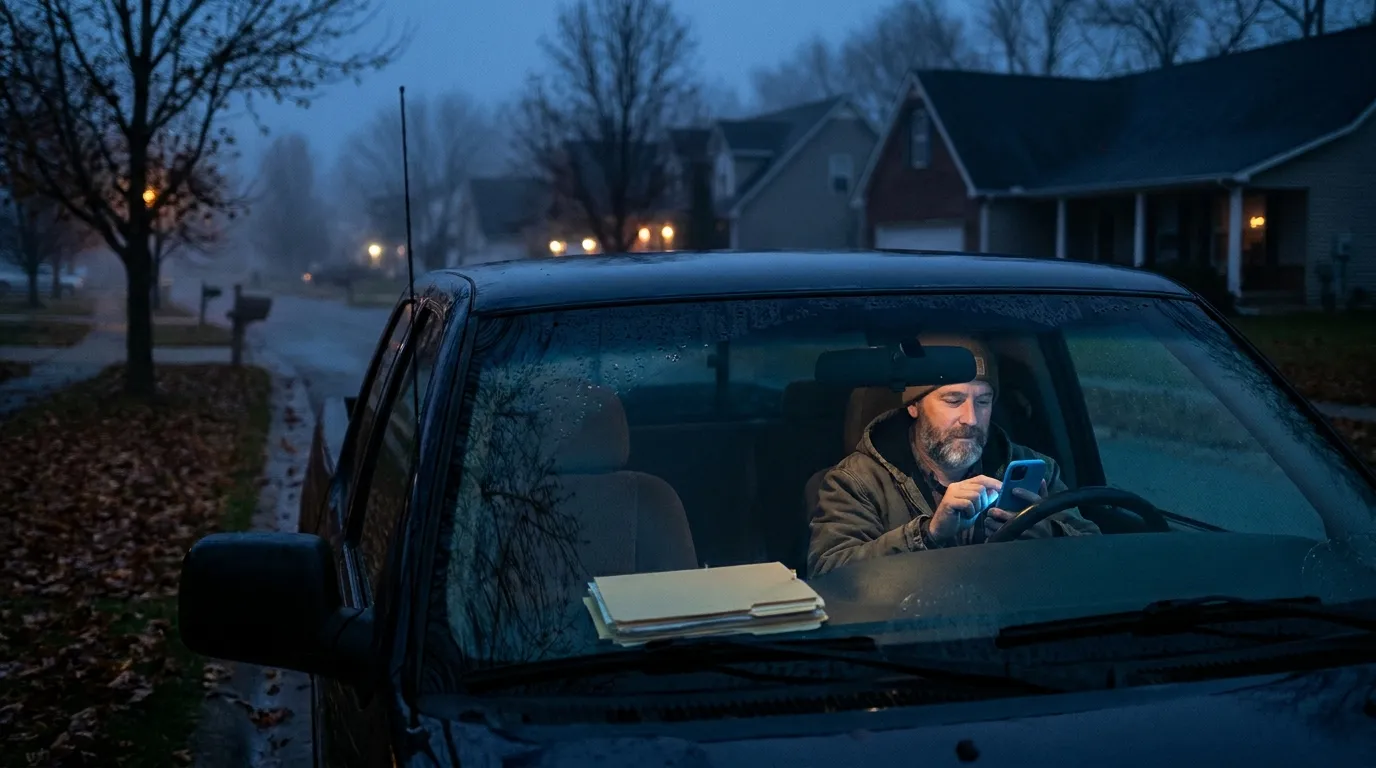
Compare that to what happens now on most nights. The phone rings 4 times, the caller hears a voicemail greeting, and they hang up and call the next company on the list. You find out the next morning, if you find out at all.
We turned that moment into a 56-second horror movie. If you run a trade, you've lived it.
The things a good AI receptionist should handle without you:
- New job requests: gets the details and books the visit.
- Questions: service area, hours, "do you work on tankless water heaters?", "do you charge for estimates?"
- Reschedules: moves an appointment and updates your calendar.
- Emergencies: follows your rule for after-hours calls, every time.
- Spam and sales calls: screens them so they don't reach your cell.
Should it answer your website chat too?
Yes, if you can get both in one system. Lots of people never call. They visit your website at 11 p.m., type a question in the chat box, and leave if nobody answers. An AI chat agent answers right away, using the same info as your phone assistant, and books the job on the same calendar. One setup, one set of rules, no lead left waiting.
Think about how your customers reach you. Some call. Some fill out a form. Some click the little chat bubble while they're on the couch, and some are at work and can't talk on the phone at all.
A phone-only AI covers one of those doors. The others still go to a form that sits in your inbox until morning, and by then they've booked someone else.
A good AI chat agent on your site should:
- Answer real questions about your services, prices you're OK sharing, hours and service area.
- Book the appointment into the same calendar the phone assistant uses, so you never get double-booked.
- Get the name, phone and address so you have everything you need for the job.
- Text you a summary, the same way a phone call does.
- Hand off to you when someone asks for a person or the job is outside what it knows.
The point is simple. Every lead gets an answer in seconds, whether they call, chat or text.
How much does an AI receptionist cost?
It depends on how much you want it to do. Phone-only starter plans run about $25 to $80 a month, with a small number of calls. Plans that answer the phone, handle website chat and book jobs run about $100 to $350 a month, and you set them up yourself. Live people cost a lot more: Ruby charges $395 a month for 100 minutes of calls, plus $268 for 30 website chats. Voicemail is free, but it can cost you the job.
Here's what well-known companies charge. We checked each company's own pricing page on November 5, 2026. Prices change often, so check again before you buy.
| Service | Price a month | What you get | Website chat? | Books jobs? |
|---|---|---|---|---|
| Upfirst (AI) | $24.95 | 30 calls | Not listed | Yes, per its FAQ |
| Goodcall Starter (AI) | $79 | 100 callers | Not listed | Not listed on pricing page |
| My AI Front Desk (AI) | $99 | 200 minutes, 100 chats, 400 texts | Yes | Ask before you buy |
| Goodcall Growth (AI) | $129 | 500 callers | Not listed | Not listed on pricing page |
| Rosie Scale (AI) | $149 | 1,000 minutes | Yes | Yes |
| Smith.ai AI Receptionist | $150 | 75 calls | Sold separately | Yes |
| Dialzara Business Plus (AI) | $199 | 500 minutes | Yes, 100 chats | Yes |
| Smith.ai AI + chat | $290 | 75 calls plus 20 live chats | Yes, live people | Yes |
| Smith.ai AI Enterprise | $500 | 300 calls | Sold separately | Yes |
| Ruby (live people) | $663 | 100 minutes plus 30 chats | Yes | Live receptionists |
| Dialzara Done for You | $1,500 and up | Built and run for you | Ask | Ask |
Sources: Upfirst, Goodcall, My AI Front Desk, Rosie, Smith.ai AI, Smith.ai chat, Dialzara, Ruby. Housecall Pro, ServiceTitan and Podium don't publish prices for their AI features.
What changes the price:
- Minutes or calls included. A busy shop in peak season can blow through a starter plan fast.
- Booking. Some cheap plans only take messages. Then you're still calling everyone back.
- Website chat and texts. Phone-only is cheaper, but it leaves your website leads waiting.
- Setup. The apps above hand you the tool and you train it. Having it built, trained and tested on your business costs more, but it works on day one.
- Connections. Linking it to your CRM or field service software can add to the price.
The cheapest plan isn't the best deal. A $25 plan that only takes messages still leaves you calling people back at 9 p.m. What you're paying for is booked jobs.
Don't compare it to a perfect human receptionist. Compare it to what answers your phone right now. For most contractors after 5 p.m., that's voicemail.
Will customers hate talking to an AI?
Some will, and you should plan for them. Most callers with a problem care about one thing: did someone answer and book me? A clear voice that says it's an assistant, gets their details right and books a time beats a voicemail box. The ones who want a person should get one fast, by transfer or a quick callback. Never trap a caller with a bot.
The bad experiences people complain about usually come from 3 setup mistakes:
- It pretends to be a person. Callers figure it out, and then they don't trust anything it says. Have it say it's your virtual assistant up front.
- It doesn't know the business. It gives generic answers, gets the service area wrong or books jobs you don't do.
- There's no way out. An angry customer or a tricky job gets stuck in a loop instead of reaching you.
All 3 are fixable. That's why setup matters more than which software you pick.
Is it legal to use an AI receptionist?
In most cases, yes. When a customer calls you and an AI picks up, you're fine. The AI rule people worry about is for calls a business makes, like robocalls. So if your AI also calls or texts people first, you need their OK before it does. A checkbox on your website form takes care of that.
The rule came from the FCC in February 2024. You can read it here: FCC 24-17. It's about AI that makes the call. It doesn't cover a customer who calls you.
Two habits keep you on the safe side:
- Have it say it's an AI assistant. People trust it more when it's honest.
- Have it say the call may be recorded. Some states say everyone on a call has to agree before it's recorded.
This isn't legal advice. If you're not sure about your state, ask a lawyer.
What should you ask before you buy one?
Before you sign up for anything, get a straight answer to each of these:
- Will it be trained on my business? Services, prices you're OK sharing, service area, hours, emergency rules.
- Can it book into the calendar I already use? If it only takes messages, you're still calling everyone back.
- How does it hand a call to me or my team? Transfer, text alert, or callback, and how fast.
- Does it answer my website chat and texts too? Same info, same calendar, same rules. Otherwise you're paying for two tools that don't talk to each other.
- Can I hear the recordings and read the summaries? You should be able to check its work any time.
- What happens when I go over my minutes? Know the overage price before your busy season.
- Is there a contract? Month to month is the safe way to start.
- Can I call it myself before I pay? If a company won't let you test it on your own business, keep looking.
That last one is the most important. A demo with a made-up pizza shop tells you nothing. You need to hear it answer as your company, with your services, and try to trip it up with the questions your customers really ask.
How can you test an AI receptionist on your own business?
Ask for a demo built on your business, not a generic one. Give the company your website or Google Business Profile so they can load your services, hours and area. Then call it yourself. Ask about a job you do, a job you don't do, a town outside your area, and an emergency. Listen for whether it books correctly and knows when to hand off.
Here's a simple test script. Call the demo line and try each one:
- "My AC stopped working. Can someone come today?" (Does it book or follow your emergency rule?)
- "Do you work in [a town you don't cover]?" (Does it say no politely and not book it?)
- "How much do you charge to come out?" (Does it give your answer, or make one up?)
- "I want to talk to a real person." (How fast does it get you to one?)
- Talk over it, change your mind, give your address twice. (Does it keep up?)
Then open the chat on the demo and type the same 5 questions. The answers should match what you heard on the phone.
If it passes all 5 for your business, it'll handle most of your after-hours calls and chats. If it doesn't, you've lost nothing but a few minutes.
We'll build that demo for you. Send us your website, and we'll set up a demo AI receptionist and website chat agent that know your services, hours and service area. Then, on a short video call, you call it, chat with it and put it through this test. Book your free live demo.
FAQ
Can an AI receptionist book appointments?
Yes, if it's connected to your calendar. It checks open times, offers the caller a slot and books it. Some basic plans only take messages, so ask before you buy. Booking is the part that turns a missed call into a job.
Does an AI receptionist sound like a robot?
The good ones sound natural. They handle pauses, interruptions and people changing their mind. It should still say it's a virtual assistant, because callers trust it more when it's honest. The fastest way to judge is to call one yourself.
Is an AI receptionist better than an answering service?
It depends on what you need. A human answering service is good with upset callers but usually charges by the minute and often can't book into your calendar. An AI receptionist answers every call at once and can book. Many contractors use AI for most calls and send the tricky ones to a person.
Can the same AI answer my website chat?
Yes, if the system includes a chat agent. It uses the same info as the phone assistant, answers questions in the chat box on your site and books into the same calendar. That way the people who'd rather type than call get booked too.
Will an AI receptionist replace my office manager?
No, and it shouldn't. It covers the calls nobody can pick up: after hours, weekends, lunch, and when three people call at once. Your office manager gets fewer interruptions and a cleaner calendar.

Alfredo Haro‑Goñi counts booked jobs, not impressions
Alfredo founded Mythic ROAS around the numbers owners actually check: booked jobs, appointments and revenue. He has managed more than $17 million in ad spend and generated more than $56 million in sales for clients. He received the ClickFunnels Two Comma Club Award and has worked with Frank Kern, Grant Cardone and Brad Lea.
Before marketing, he was a lawyer. He still reads the fine print. More about Alfredo